Dallas-Fort Worth and across Texas
Slab Leak Repair and Replacement Services in Texas
A warm patch on the kitchen tile. A water bill twice the usual. The sound of water running when every tap is off. We connect you with local leak technicians who find the leak under your slab before anyone opens a floor, then walk you through your slab leak repair and replacement options.
Answered 24/7 by someone who talks about slab leaks every day.

- Answered 24/7
- Same-day and emergency response
- Leak located before any floor is opened
- Independent local professionals
- Workmanship terms in writing for completed work
- Acoustic, thermal and pressure-testing equipment
- Professionals who work on Texas slab homes
Is it a slab leak?
Six things homeowners notice first
Most slab leaks are found by accident. None of these signs proves a leak is under the concrete, but each one is worth taking seriously, and two or more together usually are.
- SIGN 01
Warm spot on the floor
A patch of tile or wood that stays warm usually points to the hot-water line. The concrete above a leaking hot line holds heat.
- SIGN 02
Water bill jumped
A bill that climbs with no change in how you use water often means water is running somewhere you can't see, all day and all night.
- SIGN 03
Running water sound
Hissing or rushing in a wall or floor when every tap is closed is water moving through a line that should be still.
- SIGN 04
Damp or lifting floor
Carpet that's wet at one edge, tile that sounds hollow or wood that cups can mean water is reaching the floor from below.
- SIGN 05
Water heater never rests
If the heater cycles constantly, a leak on the hot side may be draining heated water that it keeps having to replace.
- SIGN 06
Meter moving, taps off
With every fixture and appliance off, the meter should be still. Movement means a leak somewhere on the property.
Built around North Texas
Why we start with Dallas-Fort Worth
More of our calls come from Dallas-Fort Worth than anywhere else in Texas, and the reasons are underground. The Metroplex sits largely on dark blackland clay that swells after rain and pulls apart in long dry stretches. Tens of thousands of single-story slab homes went up across Dallas, Tarrant, Collin and Denton counties between the 1960s and the 1990s, and many of them carry copper water lines beneath the concrete.
Put those together and you get a familiar pattern: a Garland ranch house on its second leak, a Plano kitchen with a warm strip along the cabinets, a Grapevine family watching the meter tick with every faucet closed. Our job is to get a technician to that house who has seen the pattern many times, who can locate the leak with the right equipment, and who can explain the repair choices plainly.
Tell us where the warm patch is and when you first noticed it.

The five-minute meter check
A safe test you can do before you call
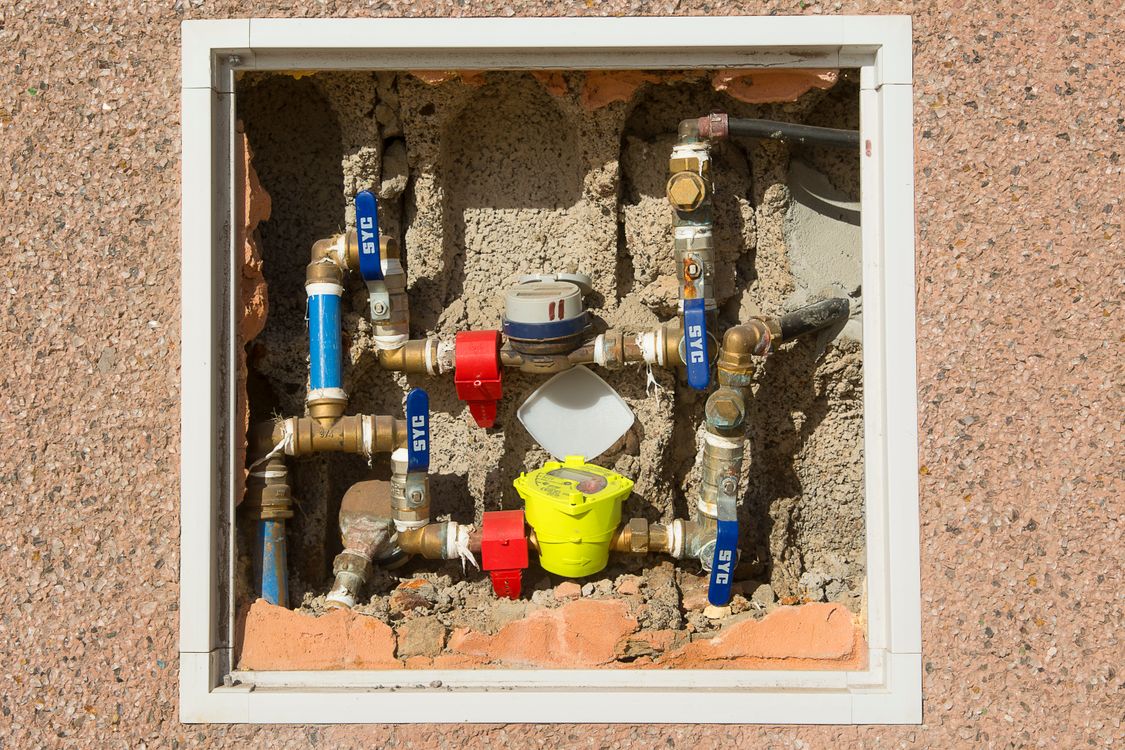
Your water meter is the simplest leak detector you own. If nothing in the house is using water, nothing should be moving through the meter.
- Turn off every tap, shower and hose. Make sure the dishwasher, washing machine, ice maker, softener and any irrigation system are not running.
- Find the meter. In most Texas neighborhoods it sits in a box near the street or sidewalk with a lid you can lift by hand.
- Look for the small leak indicator, often a triangle or star-shaped dial, and note where the main sweep hand sits.
- Wait five minutes without using any water, then look again.
- If the indicator is spinning or the hand has moved, water is leaving the system somewhere.
Say what the dial did and how long you watched it. That helps the technician plan the visit.
Why Texas slabs leak
Moving clay, aging copper and the house built on top
Almost every house in Texas sits on a concrete slab, and the water lines that feed the kitchen and bathrooms often run through the sand and soil beneath it. Across North and Central Texas that soil is expansive clay. It takes on water and swells after wet weather, then shrinks and cracks as it dries. The slab and the ground under it move with those cycles by small amounts, year after year.
Pipe under the slab moves with them. Where a copper line passes against concrete, a sharp edge of gravel or a tight bend, that repeated movement wears the metal. Joints and elbows take stress. Hot-water lines add their own expansion and contraction every time a shower runs. After enough years, a weak point becomes a pinhole.
The age of the home matters because it hints at what is under the floor. Many 1960s to 1980s Texas slab homes have copper lines. Some homes from roughly the late 1970s to the mid-1990s were plumbed with polybutylene. Newer homes are often plumbed with PEX, which behaves differently again. None of that tells you what your own house has; the technician confirms the material on site.
A slab leak is usually the end of a long, slow process, not a sudden failure.

How the leak gets found
Four steps before anyone opens a floor
Locating comes first because opening the slab in the wrong place causes needless damage. The process narrows the location step by step. It doesn't always pinpoint a leak exactly, and the technician should tell you how confident they are.
Isolate
Hot and cold sides, and sometimes individual branches, are shut off one at a time to find which line is losing water.
Pressure test
The suspect line is put under controlled pressure and watched on a gauge. A steady drop confirms the leak is on that line.
Listen and image
Acoustic listening gear picks up the sound of water escaping under concrete. Thermal imaging shows warm trails from hot-water leaks. Tracer gas is used in some cases.
Pinpoint
The readings are combined to mark the most likely spot, and the technician explains the repair options from there.
Fix options at a glance
Four ways a slab leak is usually handled
There is no single right answer. The technician should explain which of these fit your house and why, and you decide. Ask the technician to walk you through each step before work begins.
Spot repair
The slab is opened at the leak, the damaged section is repaired and the floor is closed.
- Often considered when the leak is well located and the rest of the line is in reasonable shape
- Flooring above the leak affects how disruptive it is
Reroute
The leaking line under the slab is abandoned and a new one is run through walls, ceilings or the attic.
- Often considered when the leak is under cabinets, tile or hard-to-reach areas
- Also comes up when the same line has leaked before
Pipe lining
A lining is applied inside the existing pipe, where a technician judges the line suitable for it.
- Depends on pipe condition, diameter and layout
- Not suitable for every line or every leak
Partial or whole-home repipe
Some or all of the supply lines are replaced, usually routed above the slab.
- Usually discussed after repeated slab leaks
- Also comes up when the line material or age suggests more leaks ahead
Ask the technician to compare a spot repair and a reroute for your house.
Slab leak or foundation?
Two different problems, two different trades
Cracks in drywall, doors that stick and floors that slope make people worry about the foundation. Those signs can have many causes, and on their own they don't tell you whether there is a plumbing leak.
A slab leak is a plumbing problem: water escaping from a pipe. It usually shows up as the signs above, a warm floor, a moving meter, a rising bill or damp flooring. A plumbing technician locates and repairs it.
If water is coming up now
What to do in the next ten minutes
Most slab leaks are slow, but some surface quickly through grout lines, under baseboards or at the edge of carpet. If that is happening, keep it simple.
- Turn off the main water shutoff if you can reach it safely. It is often near where the line enters the house, in the garage, or at a valve near the meter box.
- Keep people and pets away from wet areas.
- Move rugs, furniture, papers and anything valuable off the wet floor.
- Stay away from water near outlets, appliances or an electric water heater, and don't touch them.
- If you smell gas at any point, leave the home and call the gas utility and emergency services from outside.
Then call. Have the address ready, say where the water is showing, and mention whether you were able to turn off the main.
Same-day and emergency response in many areas, with a realistic arrival window on the call.
Slab leak services
Start with what you're seeing
Warm spot on the floor
What a hot-water slab leak feels like underfoot and how it's confirmed.
High water bill
Tracing a bill that won't come down to the line that's actually leaking.
Water meter leak check
The five-minute test, what the dial is telling you and what it isn't.
Slab leaks and expansive clay
Why North and Central Texas ground wears pipe under the slab.
Repeat slab leaks
When the second or third leak changes the conversation.
Where we work
356 Texas cities and communities, seven regions
Every region has its own ground, water and housing history. Pick yours to see the cities we cover and what slab leaks tend to look like there.
- 95
Dallas-Fort Worth
Blackland clay, decades of copper under slab homes, and the cities with the most slab homes. Dallas, Fort Worth, Arlington, Plano, Garland, Irving and the suburbs around them.
- 90
Central Texas
Austin, San Antonio and the Hill Country: clay and limestone ground, hard water and fast-growing PEX suburbs.
- 64
Greater Houston
Gumbo clay, a high water table and large 1960s-1990s slab subdivisions.
- 49
East Texas
Tyler, Longview, Lufkin, Nacogdoches and the Golden Triangle. Sandier soils and a mix of slab and older pier-and-beam homes.
- 26
South Texas & the Coast
Corpus Christi, the Rio Grande Valley, Laredo and Victoria. Slab homes throughout, sandy and coastal soils.
- 15
West Texas
El Paso, Lubbock, Midland-Odessa, Abilene and San Angelo. Very hard water and dry ground.
- 17
Panhandle & North Texas
Amarillo, Wichita Falls, Sherman-Denison and the Red River towns.
Common questions
Slab leak questions, answered plainly
Usually you don't, at first. A warm floor patch, a meter that moves with everything off, or the sound of water in a wall all point toward a hidden leak, but toilets, irrigation lines and the yard line to the meter can cause the same symptoms. The technician separates those possibilities by testing each part of the system before anyone concludes the leak is beneath the concrete.
Not always, but it is one of the stronger signs. A hot-water line leaking under the slab warms the concrete above it, often in a kitchen, bathroom or hallway near the water heater. Heating ducts, sunlight through a window and radiant floor systems can also warm a floor. If the patch stays warm at night and the water heater seems to run more than usual, it is worth a call.
The point of locating equipment is to narrow down the leak before any floor is opened. Technicians isolate lines, pressure test them, and listen and image along their path. Sometimes the location is clear to within a small area; sometimes it is less certain. If an opening is needed, the technician should explain where and why before any cutting starts.
A spot repair opens the slab at the leak, fixes that section of pipe and closes the floor again. A reroute abandons the leaking line under the slab and runs a new one through walls, ceilings or the attic. Which one makes sense depends on where the leak is, how old the rest of the line is, what flooring sits above it, and whether the home has leaked before.
Much of North Texas sits on clay that swells when it is wet and shrinks when it dries. Slabs and the soil under them move a little with those cycles, and copper water lines under many 1960s to 1990s homes rub against concrete, gravel and soil as they do. Over decades that wear, plus stress at bends and joints, is a common route to a pinhole leak.
Homes that have had one slab leak do often have another, because the remaining pipe under the slab is usually the same age and material and has been through the same ground movement. It isn't certain. When a second or third leak shows up, many homeowners ask the technician about rerouting the affected line or repiping instead of repairing one spot at a time.
No. This service is about locating and fixing leaks in the plumbing under the slab. Structural foundation repair is handled by foundation contractors, and drying, cleanup and mold remediation are handled by restoration companies. The technician can tell you if what they see suggests you should talk to one of those trades.
If water is coming up through the floor, turn off the main water shutoff if you can reach it safely, keep people and pets away from wet areas, and move anything valuable off the floor. Keep away from water near outlets, appliances or an electric water heater and don't touch them. If you smell gas at any point, leave the home and call the gas utility and emergency services from outside.
Found a warm spot or a strange bill?
Talk to someone who deals with Texas slab leaks every day
Call any time. We'll ask a few questions, connect you with a local leak crew, and make sure you know what to expect before anyone arrives.
Calls answered 24 hours a day, 7 days a week.